
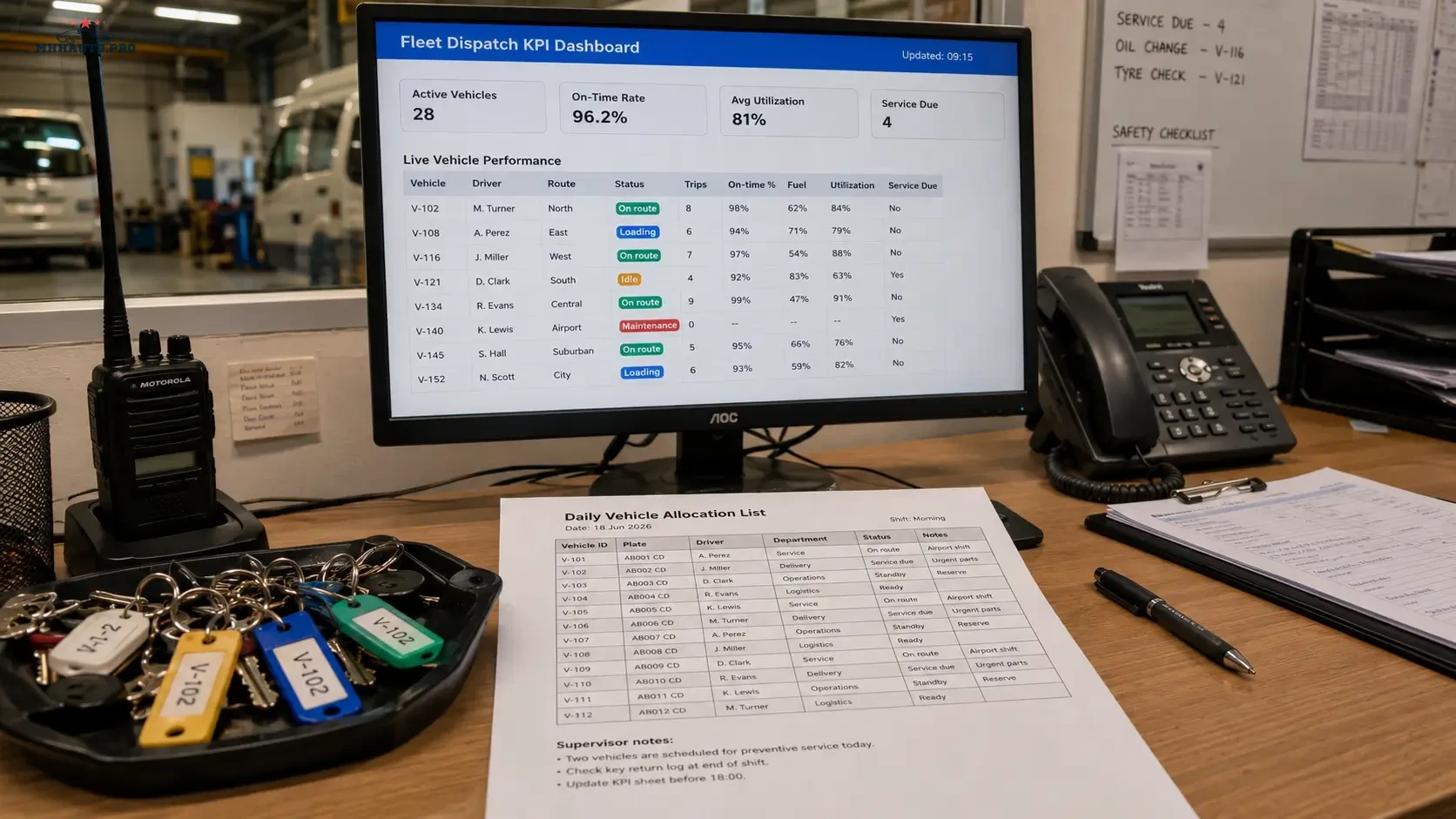
Why every fleet needs a maintenance report
Fleet maintenance becomes expensive when information is scattered. One driver reports a warning light by phone, one repair invoice stays in accounting, one diagnostic scan is saved on a workshop laptop, and one service reminder is written on a whiteboard. When this happens, the fleet manager cannot see the real condition of the vehicles.
A good fleet maintenance report brings the important information into one place: mileage, fuel cost, service due dates, downtime, repeat faults, repair cost and next actions. The report does not need to be complicated. It needs to be updated regularly and used for decisions.
This guide explains how to build a practical fleet maintenance report for commercial vehicles, vans, mixed fleets and workshop-managed fleets. It also shows where fleet software such as Solera Automotive Commercial Fleet Subscription can support reporting and maintenance planning.
The goal of a fleet maintenance report
The goal is not to create paperwork. The goal is to reduce vehicle downtime, control repair cost and identify problems before they become breakdowns.
A useful fleet report should answer these questions:
- Which vehicles are available today?
- Which vehicles are off road?
- Which vehicles are due for service?
- Which vehicles have repeat faults?
- Which vehicles are costing more than expected?
- Which repairs need to be scheduled next?
- Which problems are urgent and which can be planned?
If the report does not help answer these questions, it is probably too complicated or missing the right fields.
Core fields for a fleet maintenance report
Start with a simple table. Each vehicle should have one line and clear status information.
- Fleet number or internal vehicle ID
- Registration number
- Vehicle make and model
- VIN if required internally
- Current mileage or engine hours
- Last service date
- Last service mileage
- Next service due date
- Next service due mileage
- Open defects
- Current diagnostic trouble codes
- Repeat fault flag
- Downtime hours or days
- Fuel cost or fuel consumption trend
- Repair cost this month
- Repair cost year to date
- Assigned technician or workshop
- Next action
- Action deadline
- Vehicle status
Do not add too many fields at the beginning. A basic report that is updated every week is more valuable than a complex report that nobody maintains.
Recommended vehicle status labels
Use clear status labels so dispatch, workshop and management can understand the report quickly.
- Available: vehicle can be used normally.
- Service due soon: service should be planned.
- Service overdue: vehicle needs attention immediately.
- Defect reported: driver or inspection found a problem.
- In diagnosis: workshop is investigating the issue.
- Waiting for parts: repair is delayed by parts supply.
- Off road: vehicle cannot be used.
- Repeat fault: same or related issue has returned.
Simple labels make the report useful during daily planning meetings.
Metric 1: Mileage and engine hours
Mileage or engine hours should be updated regularly. This is the foundation for preventive maintenance. Without accurate mileage, service planning becomes reactive and vehicles are more likely to miss maintenance intervals.
Track:
- current mileage;
- mileage since last service;
- mileage remaining before next service;
- average monthly mileage;
- vehicles with unusual mileage increase.
For vehicles that idle for long periods, engine hours may be more useful than mileage alone.
Metric 2: Fuel cost and consumption trend
Fuel cost is not only a financial metric. It can also be an early warning signal. A change in fuel consumption can point to mechanical issues, tire pressure problems, driving behavior, route changes, DPF regeneration problems or sensor faults.
The report should track:
- fuel cost by vehicle;
- fuel consumption trend;
- difference between similar vehicles;
- sudden increase in consumption;
- vehicles that need inspection because of fuel change.
Do not make conclusions from one tank of fuel. Look for repeated patterns across several weeks or similar routes.
Metric 3: Downtime
Downtime is one of the most important fleet maintenance metrics. Repair cost alone does not show the full impact of a problem. A low-cost repair can still be expensive if the vehicle is unavailable for two days.
Track downtime by reason:
- waiting for diagnosis;
- waiting for parts;
- waiting for workshop capacity;
- repair in progress;
- repeat fault investigation;
- accident or body repair;
- scheduled maintenance.
When downtime is visible, the fleet manager can improve process, parts planning and workshop scheduling.
Metric 4: Repeat faults
Repeat faults should be highlighted clearly. A repeated fault often means the original repair did not address the root cause, the diagnostic process was incomplete, or the vehicle has a deeper system issue.
Examples of repeat faults include:
- DPF warning returning after regeneration;
- AdBlue or NOx faults returning after clearing codes;
- ABS sensor fault returning after sensor replacement;
- battery warning returning after charging system repair;
- engine misfire returning after coil or injector replacement;
- communication fault returning after module reset.
A repeat fault should not be treated as a new random problem. It should trigger a deeper diagnostic review, including wiring checks, technical data, service bulletins, connector inspection and repair history.
Metric 5: Repair cost by vehicle
Repair cost should be reviewed monthly and year to date. One expensive repair does not always mean the vehicle is bad, but a pattern of repeated repairs can show that the vehicle is becoming unreliable or unsuitable for the route.
Track:
- repair cost this month;
- repair cost year to date;
- cost per mile or kilometer;
- highest-cost vehicles;
- repairs linked to repeat faults;
- vehicles recommended for replacement planning.
This helps management decide whether to repair, monitor or replace a vehicle.
Weekly fleet report format
A weekly report should focus on operation. It should be short enough to review quickly.
- Vehicles available today
- Vehicles off road
- Vehicles waiting for parts
- Vehicles due for service in the next 7 to 14 days
- New defects reported by drivers
- Repeat faults reported this week
- Urgent actions for workshop or fleet manager
This report helps the business plan vehicle availability and avoid surprises.
Monthly fleet report format
A monthly report should focus on cost and trend.
- Total maintenance cost by vehicle
- Total downtime by vehicle
- Fuel cost and fuel consumption trend
- Top repeat faults
- Overdue services
- Vehicles with rising repair cost
- Vehicles recommended for inspection
- Vehicles recommended for replacement review
This report supports management decisions, not only workshop scheduling.
Driver defect reporting
A fleet report is only as good as the information entering it. Drivers should have a simple way to report defects. The report should separate minor issues from safety-critical problems.
Useful driver defect categories include:
- brakes;
- steering;
- tires;
- lights;
- warning lights;
- fluid leaks;
- engine performance;
- noise or vibration;
- body damage;
- driver comfort issues.
Every reported defect should have an owner and a deadline. A defect without responsibility is just a note.
How repair data supports fleet maintenance
Fleet reporting shows what needs attention. Repair data helps the workshop complete the work correctly. For service procedures, technical information, wiring diagrams and repair workflow, workshops can review WorkShopData Cars or WorkShopData Cars and Truck depending on vehicle coverage needs.
For fleet-level planning, reporting and maintenance visibility, review Solera Automotive Commercial Fleet Subscription.
Fleet maintenance checklist
- Update mileage or engine hours every week.
- Mark service due and service overdue vehicles.
- Track downtime separately from repair cost.
- Flag repeat faults immediately.
- Review fuel consumption trends monthly.
- Assign every defect to a responsible person.
- Record repair cost by vehicle.
- Use monthly reports for replacement planning.
- Keep diagnostic scans and repair notes linked to the vehicle record.
FAQ
What is the most important fleet maintenance metric?
Downtime is one of the most important metrics because it shows when a vehicle is not available for work. Mileage, service status, fuel trend and repeat faults should also be tracked.
How often should a fleet maintenance report be updated?
Operational status should be updated weekly or daily for active fleets. Cost and trend reports are usually reviewed monthly.
Why should repeat faults be tracked separately?
Repeat faults often show that the root cause was not fixed. Tracking them helps the workshop identify deeper diagnostic issues and avoid repeated parts replacement.
Does a fleet report replace repair data?
No. The fleet report shows what needs attention. Repair data helps the technician perform the correct test, service or repair procedure.
A good fleet maintenance report should be simple, accurate and action-based. It should show mileage, fuel cost, downtime, repeat faults and next service actions clearly enough that the workshop and fleet manager can make decisions before breakdowns happen.