
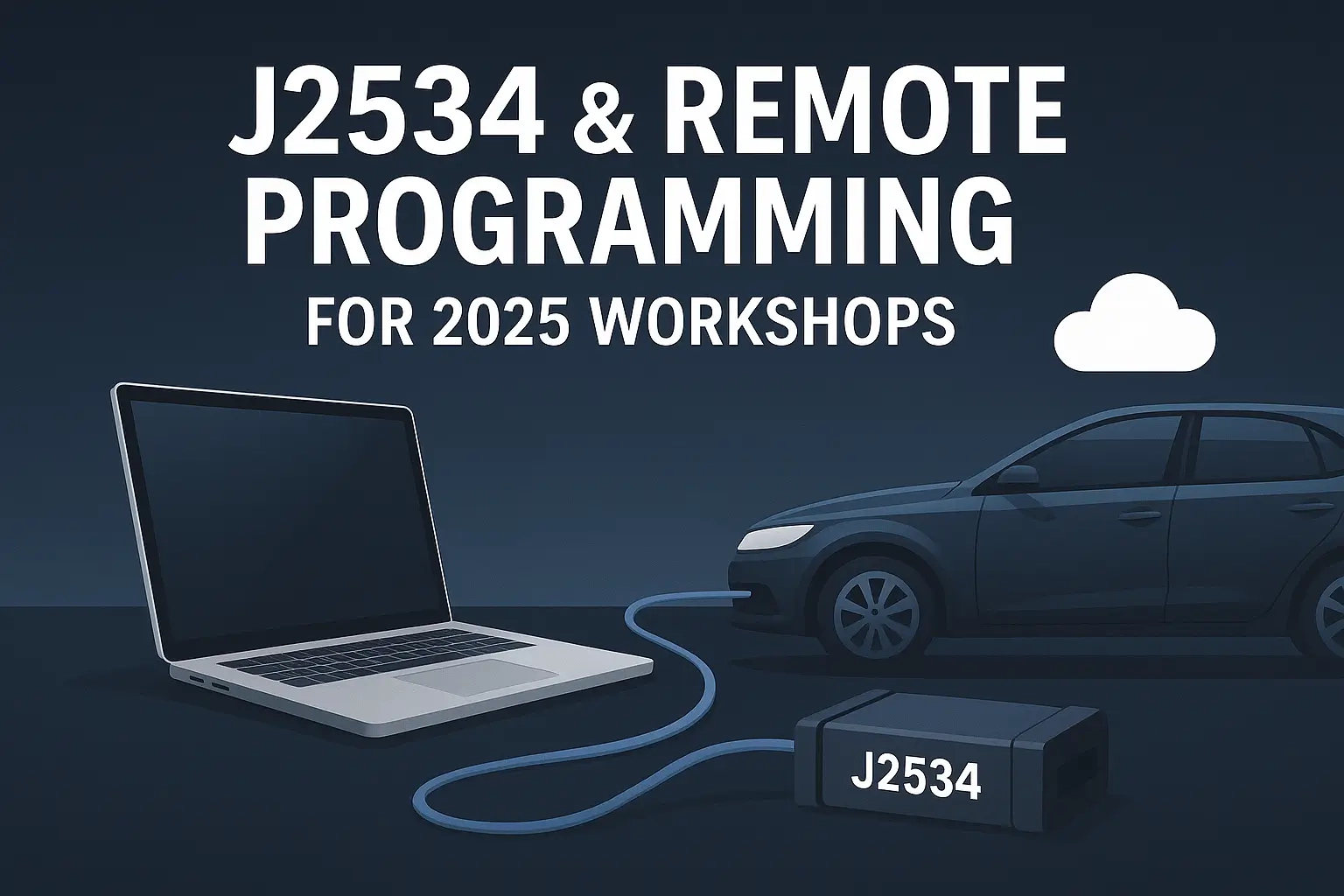
Dealer-Level Programming from an Independent Workshop: J2534, DoIP & Remote Assisted Flashing in 2025
In 2025 most OEMs still let you reflash or code modules outside the dealer network — if you have the right pass-thru interface and an active OEM subscription. The problem is that modern vehicles use DoIP, CAN-FD and secure gateways, and many shops are not ready. This guide shows how to build a programming workflow around J2534/D-PDU/RP1210 devices and when to offload the job to a remote assisted service.
1. What J2534/Pass-Thru actually is
SAE J2534 was created so that an independent workshop could connect a Windows PC with OEM software to the vehicle through a standardized interface. Modern devices (Autel MaxiFlash VCI, TOPDON RLink, Launch PAD with J2534, VXDIAG VCX SE, CarDAQ Pro) already include support for CAN-FD and DoIP, so they can talk to 2023–2025 platforms, not only to old CAN/K-line cars.
- J2534-1 – emissions and basic reflashing
- J2534-2 / D-PDU / RP1210 – extended protocols, security and OEM-specific features
- DoIP – diagnostics over IP, required by late BMW, JLR, Mercedes, VAG EVs
In practice this means: if the OEM sells its PC software online, you can buy a short subscription, connect your J2534/DoIP VCI and program the module just like a dealer.
2. Hardware options for 2025
Upper tier: CarDAQ/Opus IVS, Bosch VCI – built to be future-proof (FD CAN + DoIP), have strong tech support, and can be used for remote programming sessions.
Mid tier: Autel MaxiFlash J2534 VCI, TOPDON RLink J2534 – cheaper, but already support CAN-FD and DoIP and pair well with the same brand’s tablets.
Entry/mixed: VXDIAG VCX SE or branded Launch/Thinkcar interfaces – good for specific OEMs or when you need a second line of tools.
3. Remote Assisted Programming (RAP)
Not every shop wants to maintain 10 OEM accounts. That’s why remote assisted programming services appeared: you book a slot, connect your J2534/DoIP device, and the remote tech performs the programming from their side. You pay per job, and the cost already includes OEM subscription and responsibility for a failed flash.
Typical workflow:
- Shop connects a certified pass-thru device to the vehicle and to the Internet.
- Remote tech connects to the device and launches OEM software.
- Module is programmed/coded; a report is generated for the customer.
This model is especially handy for one-off jobs (PCM/TCM updates after TSB, telematics swap, ADAS camera replacement) and for brands where subscriptions are expensive or geo-limited.
4. Local OEM access vs remote service
| Local OEM subscription | Remote assisted programming |
|---|---|
| Cheaper if you do the brand often | No learning curve, pay-per-job |
| You control the process, log files stay in the shop | Provider takes responsibility for bricked module |
| Need trained tech + good power supply | Just connect VCI and stable Internet |
| Good for fleets/taxis with repeatable updates | Good for rare European/Japanese cars |
5. Risks and requirements
- Stable power: use a 12V/14V maintainer, not a battery charger.
- Good network: DoIP programming is very sensitive to drops.
- Correct VCI drivers/firmware: outdated pass-thru firmware is a common cause of failed flashes.
- Vehicle must be unlocked: if the car has SGW/SFD and your tool cannot open it, the OEM app will also fail.
6. 2025 shopping checklist
- Pass-thru device with DoIP + CAN-FD
- Windows laptop dedicated to OEM software
- At least one remote programming provider (account ready)
- Table of OEMs with prices and subscription URLs for your staff
- Procedure for customer pricing: flash price = job time + OEM/subscription cost + risk
Conclusion
J2534 and DoIP made it possible for independent workshops to keep vehicles in-house, but in 2025 the smartest setup is hybrid: do frequent OEMs locally and push rare/complicated cases to remote assisted programming. That way you don’t lose the job to the dealer and you don’t have to maintain every single subscription.